One Document, Three Important Functions
In export and import activities, shipping documents have an important role to ensure the shipping process runs smoothly. One of the documents that must be known in sea shipping is the Bill of Lading (B/L).
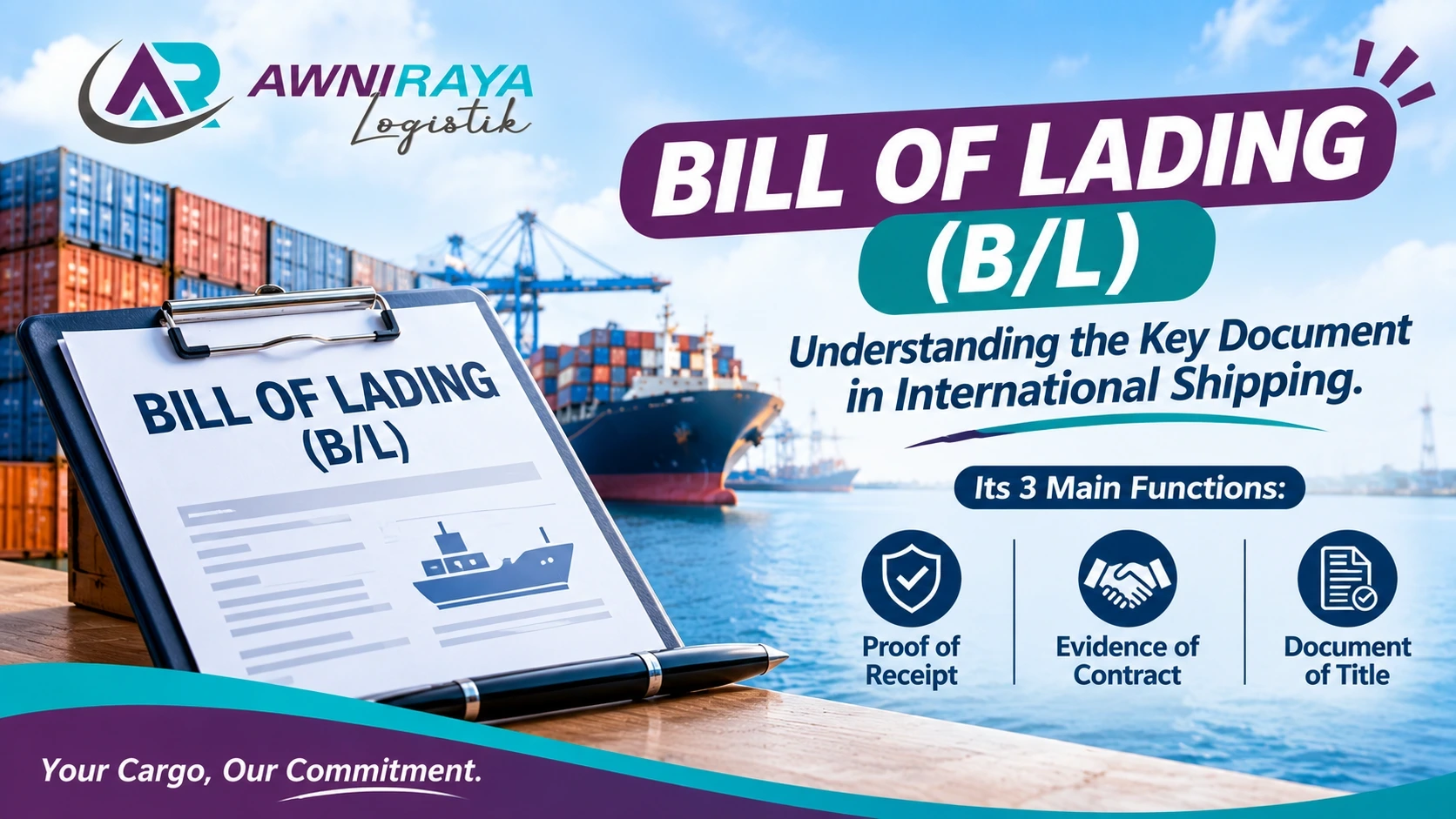
A Bill of Lading or B/L is an official document issued by a shipping company or carrier as proof of receipt of goods to be sent by sea.
What are the functions of a Bill of Lading?
A Bill of Lading has three main functions:
Proof of Receipt – As proof that the goods has been received by the carrier.
Evidence of Contract – As proof of the existence of a transportation agreement between the sender and the carrier.
Document of Title – In certain types of B/L, this document functions as proof of title to the goods and can be used in the process of transferring ownership.
Information contained in the Bill of Lading
Some information important things listed in the B/L include:
Shipper (Goods Sender)
Consignee (Consignee)
Notify Party
Vessel & Voyage
Port of Loading (POL)
Port of Discharge (POD)
Description of Goods
Container Number & Seal Number
Gross Weight & Measurement
Make sure all information matches other shipping documents to avoid administrative errors.
Why is the Bill of Lading Very Important?
Incorrect information on the B/L can cause problems in the delivery process, documentation, and picking up goods at the port purpose.
Therefore, checking documents before issuing a B/L is very important to help avoid delays and additional costs.